[00:01] Justin Baeder:
Welcome to Principal Center Radio, bringing you the best in professional practice.
[00:06] Announcer:
Here's your host, director of the Principal Center and champion of high performance instructional leadership, Justin Baeder. Welcome everyone to Principal Center Radio.
[00:15] Justin Baeder:
I'm your host, Justin Baeder, and I'm honored to be joined today by Kira Keene and Amy Jenkins. Kira is a partner at the Learning Accelerator, where she helps school districts figure out how to integrate technology to personalize learning for students. And Amy is Chief Operating Officer of Education Elements, where she helps school districts transform learning by moving to more student-centered practices.
[00:38] Announcer:
And now, our feature presentation.
[00:40] Justin Baeder:
So Akira and Amy, welcome to Principal Center Radio.
[00:42] Amy Jenkins & Kira Keane:
Thanks so much.
[00:43] Justin Baeder:
Thank you. So we're here today to talk about communication and specifically around personalized learning initiatives, which we know is something that's fairly new to our profession. It's definitely new to parents. There are a lot of potential misunderstandings, a lot of different ways that terms are used. And if we're not careful, we can really get off on the wrong foot when it comes to different initiatives around, say, technology or personalized learning. There's great potential for people to be confused, but also great opportunity in getting people on board, in building commitment with our communities and having a successful initiative.
[01:20]
So I wonder if we could start by talking about what prompted the recognition of the need for a guide like this in the schools that you work with.
[01:27] Amy Jenkins & Kira Keane:
I can take that one. So over the past few years, as we've worked with school districts, one of the biggest challenges that they say they face is getting buy-in for this work. There's a big concern among teachers, among principals, that this is just another initiative. And there's concern from parents about any changes happening in the classroom that they don't understand. So as we started working with schools, one of the things that we realized is people don't always know why a district is making a change. Our parents don't always know why something different is happening in their classroom.
[01:58]
And it's really important to get two things right. One is, why are you doing this? And really make sure that there is a clear reason for doing something different. And the second is telling everybody about that why and being really explicit about why you're doing the work, what it's going to be, And how it's going to be different and what's going to be the same as well. So we had a lot of individual conversations about this. And we did it again and again in so many districts.
[02:26]
But there are 13,000 of them in the U.S. and we're not talking to all of them. So we decided to work together to put together a series of guides. The first one, Kira and I wrote together. And that was around...
[02:38]
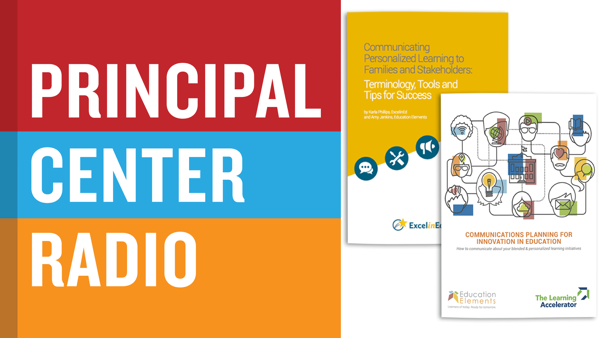
taking a strong strategic approach to communication included a lot of examples. And then the second one we wrote with Carla Phillips of Excel and Ed, and that was some more tools and tips and strategies, as well as some results from some message testing. And combined, we think it gives school districts the ability to better hone their messages, to have a stronger plan, and to make sure that everybody understands why and gets more excited about the work.
[03:05] Amy Jenkins & Kira Keane:
Yeah, this is Kira. And I think the thing that I would add, I actually come from outside of the education space. I have more than 20 years of communications and advocacy work in other industries. And when I came here about five or six years ago, I realized that there's just classic and strong communications tools out there that we weren't seeing schools using. And so what Amy and I really worked hard to do is capture the best practices of communications, storytelling, stakeholder advocacy, and put that in a place and in a format for educators and school leaders to use.
[03:38] Justin Baeder:
Well, I think this is a really interesting kind of case study around communication because personalized learning is something that needs really clear communication. And I wonder if we could just kind of define personalized learning the way you do in the white paper.
[03:52] Amy Jenkins & Kira Keane:
There's a lot of different definitions of personalized learning floating out there. In this paper, the one we use comes from INACOL, which is around tailoring learning for each student's strengths, needs, and interests, including enabling student voice and choice in what, how, and where they learn to provide flexibility and supports to ensure mastery of the highest standards. And I would say that it's a long definition, and that's one of the reasons why we need to find better ways to communicate, because that's not language that everybody understands, and it doesn't always tell people what is going to look different and how things are going to play out in the classroom. So it's a useful anchor, but for each school or district, defining it for what it will look like in their own context matters a lot too.
[04:38] Justin Baeder:
seen this happen where a school district will have every intention of fulfilling that definition and pursuing that vision. But what gets communicated to parents is, hey, we're buying iPads for all the kids, or hey, we're buying laptops for all the kids. And that might be a part of it, but those are not the same thing. So talk to me a little bit more about that translation that needs to happen so that parents don't walk away with something that's really the the wrong takeaway you know what i mean like if their takeaway is my school district's gonna blow my tax dollars on ipads how do we queue up that conversation so that it's you know it's considered by parents in the right terms
[05:16] Amy Jenkins & Kira Keane:
You know, I think that's a really great point. And it's something that we've seen, especially early on when these initiatives would start taking hold in schools. You know, we would see often the IT director being tapped to do an FAQ for parents. And of course, the first five questions are, you know, in the FAQ will be, we're buying Chromebooks or we're buying iPads and here's our Internet connectivity. And the whole why that Amy was talking about earlier doesn't show up to the very end. So that's one reason Amy and I were so excited to when you were reaching out to us to have this sort of be a principle and leadership conversation, because I think really that's where it has to start, where the visioning that Amy talked about needs to start at the principal level, at the district level.
[05:55]
And that way you are communicating what the impact on students will be. And it aligns with the district's larger strategic goals for student learning and student success.
[06:05] Justin Baeder:
And I think that's important that they have those strategic goals and learning goals, because certainly I think there's the potential for a school to start the conversation at the technology level. Maybe it is the superintendent and the IT director hatching a plan. But it can't stay at that level. It really does need to be a strategic conversation, a leadership conversation, and one that really focuses on the bottom line of learning, not the bottom line of, you know, of which devices are we going to are we going to purchase. So I love that, you know, that thinking from the very beginning can set us on the right track. What are some of the concerns that you see among parents?
[06:43]
Like, let's say we do have a a well thought out initiative. We're not just focused on the technology. We really are thinking about the pedagogy and the learning that we want to see as a result of a personalized learning initiative. What are some of the concerns that parents typically have that schools should anticipate and build their messaging around?
[06:59] Amy Jenkins & Kira Keane:
Parents have a long list of concerns. I would say the top of them is, is my student gonna be spending all their time in front of the device? No matter what you say, that's something that comes up again and again. And then this concern, if my student is spending all the time in front of their device, it's not just screen time, which people worry about, but it's, is their teacher paying less attention to them? What's so important to communicate is your teacher gets more time with your students. Now your teacher knows more about your student.
[07:28]
Your teacher has more small group instruction time with the student, but that can sometimes be really hard for parents to grasp, especially because people show pictures of personalized learning and they don't show the one-on-one moment with the teacher. They show the student with the headset in front of that tablet or that computer. So I would say that it's related to the fact that there is technology and this concern that the technology is taking the place of the teacher. There's a second set of concerns which are around students moving at their own pace. So is my student going to get left behind. Is my student not going to be exposed to the level of rigor that they need in order to perform well.
[08:09]
Or is my student going to be held back. Personalized learning is trying to address all of those but it still comes up as a concern. Is my student going to be prepared for college. If you make shifts if this has any shift towards competency is that going to get in the way also. So we see this whole set of concerns that come up and a lot of them are rooted in education worked for me the way it was. And now you're telling me that you're gonna go ahead and do something different, which I'm not quite sure that is needed.
[08:40] Amy Jenkins & Kira Keane:
I think I'd like to add though, just one point that we have to be really mindful that it's not just parents that have concerns. I think one of the big takeaways from the white paper that Amy and I worked on around communications planning is that you really need to identify and understand and know your stakeholder groups, your audiences. And so you've got your external ones like parents, like you just talked about, or community members or business leaders, but you also importantly have your internal audiences, right? Teachers, there are going to be teachers who are concerned or worried or there may be misinformation there or administrators or students themselves may be uncertain about what's going on. So communication has to happen at multiple levels with multiple stakeholder audiences. And we have tools and strategies to help schools do that.
[09:27] Justin Baeder:
Yeah. And you mentioned in the first white paper on personalized learning that teachers actually can be the best messengers to students and to families and to the community if they're brought on board. And I wonder if you've seen this. I think there's a little bit of a temptation on administrators part to use the technology initiative and the personalized learning as an excuse to kind of swoop some pedagogical changes and maybe some curriculum changes in. under the radar and then kind of justify them because they're needed to teach 21st century skills and things like that. What have you seen in the way of kind of surprises, maybe unpleasant surprises for teachers when it comes to initiatives like this?
[10:08]
Because I certainly have seen that happen where the principal sells it to the staff as, hey, you know, you're going to have all this new technology. And then it turns out that there's more to it than that. And hopefully they can they can win the teachers over on that. But if we're not starting from that pedagogical goal.
[10:23] Amy Jenkins & Kira Keane:
I think one of the biggest surprises that happens is when a district leader or a principal talks about an initiative, says we're going to bring in this technology, says we're going to make some changes, but then doesn't give enough support. So one of the problems is that it is often easier to budget for buying those devices. You get that bond. You put all the money towards your devices and your infrastructure, and you don't put enough money towards the support. So I don't think it's that the leadership is changing what they expect teachers to do. In fact, I think they often say, we're going to give you devices.
[10:56]
We want you to do something differently. But then they don't have the money behind it to provide the support for the pedagogical changes. They only had the money for those devices because of the way the funds were allocated. And that can end up being a pretty terrible surprise, which is I need to do something differently in my classroom and I'm not gonna get enough support in how to actually do it. But you're gonna walk in and expect to see something different tomorrow.
[11:23] Amy Jenkins & Kira Keane:
Yeah, it's interesting listening to Amy describe that surprise environment. Stepping back a little bit, one of the key important factors of having a strong communications program is that you actually build a culture of trust and a culture of transparency and a culture of we're all in this together. This is not just gonna be a top-down edict, right? From the superintendent saying, we're buying this, now do it. But that with two-way communication and with engaging all of these different audiences, you'll actually have this be more of a collaborative effort. And in many ways, that reflects much of what we're trying to teach our students, right?
[11:59]
In this 21st century learning, we're trying to teach them it's okay to try things, to test things, perhaps even to fail. And we want our teachers and our staff to understand that as well. You know, we have to have that be a school-wide shift in culture.
[12:12] Justin Baeder:
Well, I want to make sure we get to talking about communication strategy more broadly. But before we move on from personalized learning and maybe technology initiatives, what are some tips or some kind of insights that you took away from the study that you did and the work that you've done in many communities and school districts around the language that we use to communicate with parents? I understand you've identified some language to maybe be careful about when it comes to communicating about personalized learning. And could we talk about some examples of that?
[12:41] Amy Jenkins & Kira Keane:
Absolutely. So there were a few surprises and a few things we already knew that came out of the message testing. One of the things is avoid jargon. And I know this seems pretty obvious, but as educators, we often default to using words that parents just don't necessarily understand. So walking away from jargon and saying, even if the way that I would refer to this is rigorous academic content standards, that might not be the best way to communicate to everyone. We also know that parents aren't really interested in hearing a lot about standardized testing.
[13:14]
They don't want to hear about more assessments. They've heard enough about that. Then there's terms like student agency, voice, and choice. Theoretically, this is something people are excited about. But parents don't understand what you mean when you say student agency, and they might not even understand voice and choice.
[13:33] Justin Baeder:
It makes sense because there's a little bit of a ring of like underwater basket weaving is now going to be something that my kid can choose instead of senior English. So it's one of those things that to us as educators sounds great, but parents have a different set of concerns.
[13:47] Amy Jenkins & Kira Keane:
Absolutely. And then starting off, and we talked about this a little bit earlier, but talking too much about technology and having that be front and center also waves some red flags for people. There's other words, though, that we know work really, really well. So when you talk about how something is going to help a student, when people hear this is going to help my child in some way, that's really, really positive versus we're going to throw the baby out with the bathwater. This idea of drastic and dramatic change didn't test nearly as well as we're going to make some changes and those are going to help your child.
[14:22] Amy Jenkins & Kira Keane:
Yeah, I think we've often heard that Many audiences, parents, teachers, others are wary of a revolution, but more welcoming of an evolution in teaching and learning.
[14:32] Justin Baeder:
Yeah, it reminds me of what the Heath Brothers say in their book, Switch, that we should shrink the change. Don't make this some grand, dramatic change, but make it a kind of a natural next step if you want people to feel like they can do it, to feel like it's going to be successful.
[14:47] Amy Jenkins & Kira Keane:
And that matters a lot for your teachers also. One of the things we find time and again is telling teachers everything is going to be different is incredibly scary. Talking about personalized learning at a set of best practices, many of which you are already doing, that this is good teaching perhaps amplified and showing them where they can build on what they're already doing in their classrooms. makes a really big difference because they actually can see the path towards moving from what they're doing today to what they might be expected to do in the future. One other message that resonated really well with parents is when you're talking about technology, that it's an idea that it gives teachers flexibility to help all students so that it's not technology in and of itself. It's the fact that introducing this technology into the classroom is going to help teachers to be more effective.
[15:37]
It's also gonna help teachers to have more time for individual attention and really getting to know their students better. And that idea of supporting teachers mattered a lot to parents because they can see that direct correlation to how that helps their kids. And it matters to teachers too, because they see this not as something that's being done to them, but it's something that's being done with them and for them.
[15:58] Justin Baeder:
Well, let's shift gears now and talk about the other white paper that you've published, and we'll link to this on our website. But the title is Communications Planning for Innovation in Education, How to Communicate About Your Blended and Personalized Learning Initiatives. And this is a somewhat longer and more detailed guide on strategic communication for school districts. And it's one of those things that depending on the size of your school district, you might have a dedicated department for strategic communication, or it might be something that gets almost no attention at all. And I personally was a principal in Seattle Public Schools, so we did have a dedicated team around strategic communications and a communications plan and certainly some proactive efforts to get good stories out into the community and to get key messages out around key initiatives. But I think too often, communication is an afterthought, and we
[16:51]
start the process of communication far too late at the time when it's okay, something is happening, please tell the public about it. But that's not where we really need to start, is it?
[17:01] Amy Jenkins & Kira Keane:
It really isn't. I mean, that being said, if you find yourself in the middle of a project and have a crisis or something, please do step back. But you're right. Ideally, you start off carving out some time and space to really, truly think about who you're communicating with, who are your audiences. And we talked about this a I think if you're to boil down the communications recommendations in this white paper that we put together, it is know your audiences, know who they are, what they care about, understand how they like to be communicated with. In many instances, you know, we want to leap right ahead to a tactic.
[17:37]
Oh, let's have a town hall meeting or let's put out something on our website without first thinking, well, who are we talking to? And is that really the best way to reach them? There may be language barriers. There may be Internet access issues. that get in the way of an electronic communication. So understanding your audience, then you can really think about, well, who are the best messengers for that audience?
[17:58]
As Amy had said before, teachers are probably the most trusted, along with principals, most trusted messengers for parents and for the community. But students are fantastic messengers as well, to their peers, to other teachers, to their parents. So spending some time thinking, linking messengers and your audiences, And then you can fold in some of the learnings that that we were just talking about around the key messages. Right. And you can link them all together. Once you have all that laid out, the tactics actually become much more obvious and much more effective.
[18:32] Justin Baeder:
Yeah, I think you're right. I think often we do jump straight to the format. Hey, let's have a town hall meeting or hey, let's. talk about this at curriculum night. And then boy, that does not go the way that we think it will, if that's where we start. So yeah, I love on page, I think it's page 27 of the communications guide, you have some kind of quick start questions.
[18:51]
And those are around goal and audience and message for that audience, and then messengers, and then kind of some success metrics and so on. So really fabulous guide there.
[19:02] Amy Jenkins & Kira Keane:
Yeah. And one thing that I think that really makes this work unique is that we've embedded multiple really granular usable artifacts from several districts that have worked with education elements. And they've been very generous in sharing what worked, what didn't work and actually linking to like sample videos and sample FAQs and sample website pages, which anyone can access and use and share. So this is open free content. that any school district across the country can use. And it's just incredibly valuable.
[19:37]
And we didn't see this level of real world example being shared anywhere else, which is why we wanted to partner with Elements to do it.
[19:45] Justin Baeder:
Yeah, this is fabulous. And I'm looking at page 29. If you just print out the document, you may not realize that these are actually hyperlinks to videos and to the communications plans from dozens of different school districts. There are videos of interviews with district administrators and students and just so many great examples of media coverage and teacher voice and so many great examples in here. So this really is kind of a masterclass in a single document around school communications. So if you are in a small or mid-sized district that does not have a dedicated department for communications, I really want to encourage you to check out the Communications Planning for Innovation in Education white paper.
[20:23]
And again, we'll link to that on our website. And that's published by Education Elements and the Learning Accelerator. And Amy and Kira, if people want to get in touch with you respectively and learn more about your work, where's the best place for them to do that online?
[20:36] Amy Jenkins & Kira Keane:
You can check out our website, which is edelements.com. You can also follow us on Twitter. We tend to post a lot of articles there and try to share things that we're learning. So you can find us on Twitter as well.
[20:48] Amy Jenkins & Kira Keane:
Yep. And same for us. We have learningaccelerator.org website, but we also have a platform called Blended and Personalized Learning at Work. So that is a place where we have all of these resources you can find. And of course, we're on Twitter at Learning Excel.
[21:03] Justin Baeder:
Well, Amy and Kira, thank you so much for joining me on Principal Center Radio.
[21:06] Amy Jenkins & Kira Keane:
Thanks so much, Justin. Wonderful. Thank you.
[21:09] Announcer:
Thanks for listening to Principal Center Radio. For more great episodes, subscribe on our website at principalcenter.com slash radio.